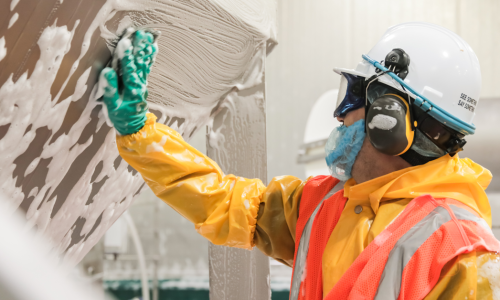
Reducing Microbial Risk Through Experience and Expertise
At the end of the day, microbial risk isn’t a project you finish. It’s a habit you keep.
Blog
Managing your sanitation program can either be a full-time job that you’re staffing, training, and operating by yourself or it can be a service you’re getting from experts.
Every plant manager knows where their attention goes during the day: keep the lines running, keep throughput up, hit the numbers, and convert raw materials. Sanitation is often seen as a necessary pause after production, but that perspective is backward. Reframing sanitation as the first step highlights its critical role in ensuring the next run begins quickly and cleanly. Someone must own it daily, and how well they do it shows up in your bottom line.
Plants often see sanitation as time taken away from production. When experts handle it, sanitation becomes a reliable process that saves time, reduces waste, ensures consistent compliance, and boosts overall plant efficiency.
Experts lower your sanitation costs in four ways: procedures written for your actual equipment, chemistry matched to the soil and equipment type, equipment that comes clean without a two-hour teardown (hygienically designed), and trained team members who execute the process flawlessly. More experienced sanitation teams shrink your sanitation window, saving you money and giving you more production time. You also stop losing hours to re-cleans, late starts, holds, and unplanned investigations. Fewer surprises mean a schedule you can trust, and that means increased capacity.
That trust is just the visible tip of a much bigger picture. Recognizing this can help you see how sanitation impacts your plant’s overall success and strategic position.
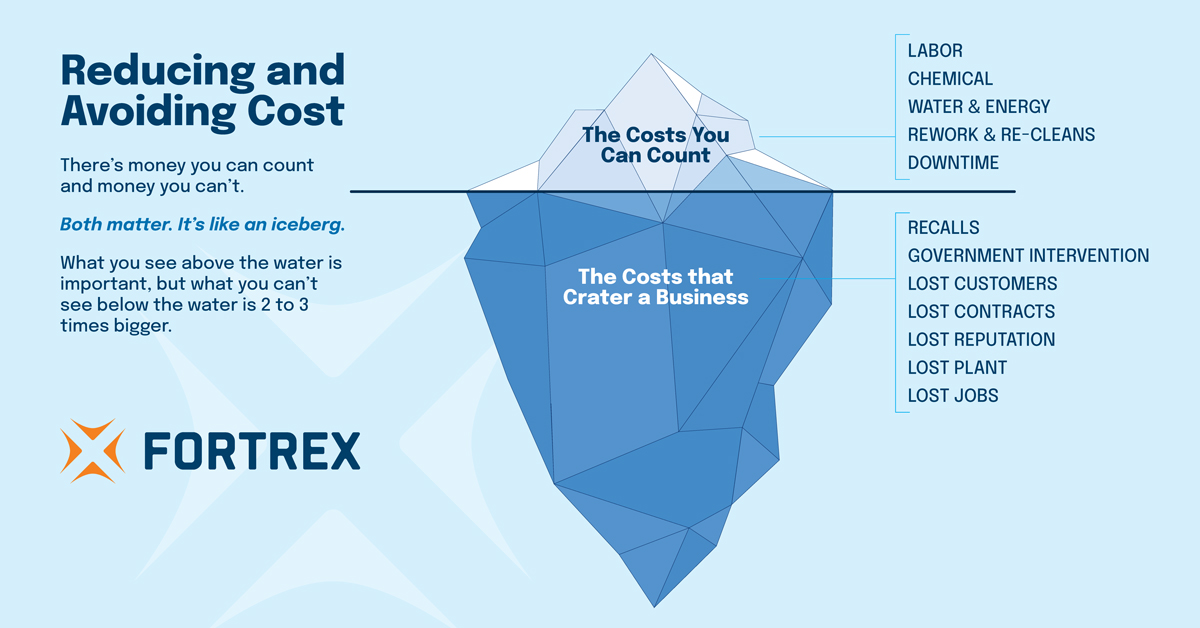
There’s money you can count and money you can’t. Both matter. It’s like an iceberg. What you see above the water is important, but what you can’t see below the water is 2 to 3 times bigger.
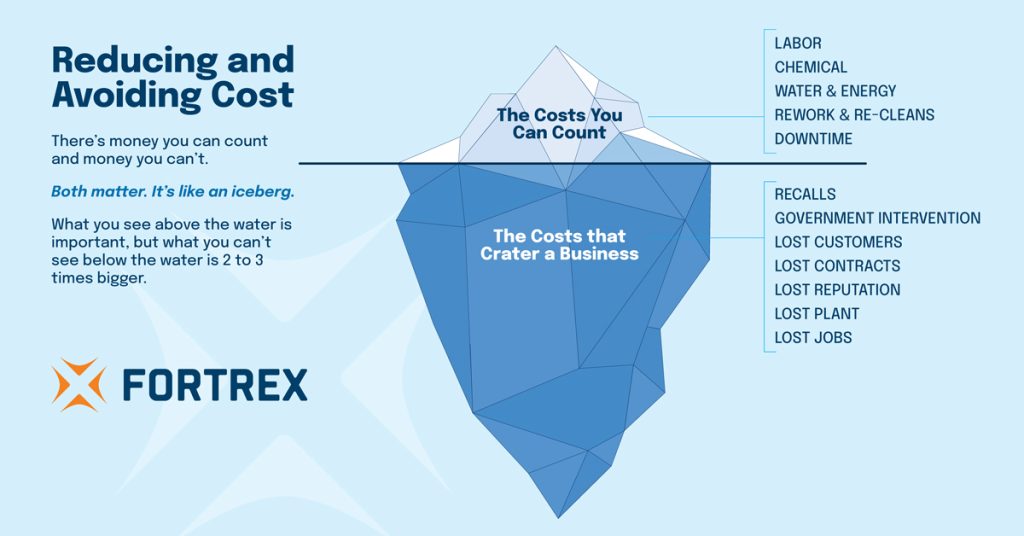
The Cost of Poor-Quality Iceberg: What you can measure sits above the waterline. What can put you out of business sits below it.
Above the water, the smaller part: less chemical going down the drain, less water and energy, less labor spent doing a job twice, equipment that lasts longer because you’re not eating it up with the wrong chemistry.
The below-the-water part is bigger. The recall that never happened, the customer audit that came back clean, the contract you kept. These unseen benefits are crucial, and that’s why someone must say it out loud. Proper sanitation execution secures your reputation and operational continuity, even if it doesn’t show up on a report.
Managing your sanitation program can be a full-time job you’re staffing, training, and operating yourself, or it can be a service you get from experts. If you’re ready to find out what paying someone would actually save you, let us know.
At the end of the day, microbial risk isn’t a project you finish. It’s a habit you keep.
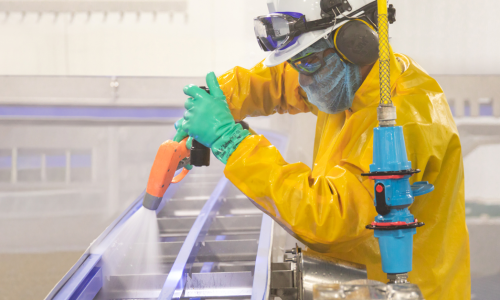
Risk reduction isn’t a policy binder. It’s the outcome of a team that’s seen enough to know what to look for, and dedicated to correcting any issue, every time.

At Fortrex, our core values aren’t simply what we believe, they’re how we lead, how we operate, and how we help create a safer future every day.